.png?width=1887&height=531&name=Becks_Logo_2_Horizontal_D_FullColor.png%20(1).png)
Good Morning!
Good Morning!
I hope you had a great week. You wouldn’t have been looking at the markets if that were the case, I’m plenty sure. My week was super busy as several people wanted a presentation on the January report. I was in Minnesota, Nebraska, and Kentucky, and had the chance to talk to a ton of growers. I know the mood is one of concern, and there’s good reason for it. With how these markets are trading, it may limit acres a bit this year, and things can change rapidly, depending on how that plays out. As soon as I got home for the week, we left for Chicago so our 8th-grader, Toby, could play in a basketball tournament. So, by the time we get home, it will have been a week of sleeping in a hotel. I’m ready to be home for a few days, that’s for sure. Stay in touch.
This week, we talked about Monday’s crummy report on the Beck’s podcast. CLICK HERE to listen to it.
I appreciate those who have reached out and/or signed up to come to our conference this February. Beck’s is our premier seed sponsor, and we’re looking forward to their presence at our event. CLICK HERE for more information.
The corn market took it on the chin, while beans lost some ground but held together pretty well. While the report was super-bearish for corn, the numbers weren’t nearly as bad for beans. South American weather overall looks good, but Argentina’s dryness has started to hurt its ratings. Outside markets were likely a mixed influence.
- The US Dollar was up .311 at 201.
- February crude oil was up .45 at 44.
- The DOW was down 196 points at 49,547.
CORN
March 2026 corn had a poor week after the bearish USDA report dropped. On Friday, March settled at $4.24 ¾, up 4 ½. This was 2 ½ off the high and 4 ¾ off the low. March lost 21 cents for the week. Technically, violated every level of support and moving averages we could this past week. At the same time, we saw some buying late in the week, indicating the market is trying to stabilize. With a robust stock estimate for the U.S. balance sheet, caused by the huge 2025 production, we started the week getting pummeled. However, as the week progressed, the focus shifted to impressive demand and weather issues in Argentina. The corn crop ratings in Argentina dipped 11% on the week due to hot, dry conditions and the forecasts for rain that have continued to underperform. I could see the corn market continuing to heal up if this demand continues. We also likely have some question marks about what 2026 acreage might look like, given profitability concerns. For now, I’d have some patience with the corn market if possible. A big rally is hard to fathom, but some appreciation in prices isn’t out of the question either.
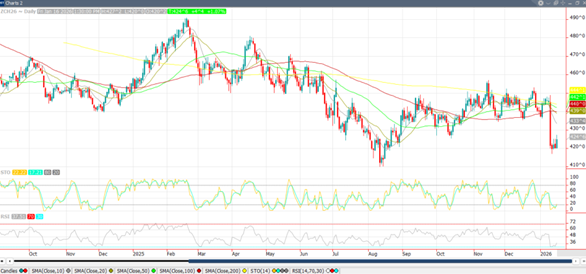
DEMAND
Corn export demand was impressive. This week’s sales rebounded to 1.140 mmt, significantly above a week ago. Corn grind for ethanol was an all-time record at 117 mb! Stocks were, of course, higher, and basis was steady/improved:
- My local basis: 20 under March (status-quo)
- Decatur: 5 over the March (status-quo)
- Louis River: 26 over March (6 cents improved)
CASH CORN
Cash prices got worked over this past week. While the river improved on basis, most interior bids were stagnant. Most likely, some corn moved with growers needing cash and expecting markets to struggle to move higher. For those with cash corn, I expect basis will eventually work firmer once we get past the winter rush. The big question is what will the board do? Given the impressive demand, we have a chance to eat into some stocks. We need to see these low prices keep demand humming along, given a 2.227 carry-out number. One thing remains: we have a huge demand, both worldwide and in the U.S. With that being the case, we have to see big production this year. Therefore, the Safrinha crop will be closely watched, as will what the U.S. acres are projected to be. If a person can keep some corn ownership to see how this all plays out, I’d sure consider it.
2026 CORN
December 2026 corn ended the week at $4.49 ¾, down 14 ¼. December 2026 performed a bit better than the old crop. Due to the high demand, I’m assuming some support will be needed for December 2026 until we sort out the acreage situation. My guess for now would be in that 94 ma range. I think quite a few corn acres have already been locked in, but I also assume any swing acres could trend toward beans, given profitability concerns. The big issue for many of us is that crop insurance prices are likely to be a fair bit lower this year, and costs are higher. Last thought on pricing for fall 2026 is I don’t want to lock in a loss with harvest 9 months away. Here is the link for more info on the AgMarket app. https://hubs.li/Q03qt2Qd0
Corn Market Theme: The corn market has an uphill battle after the USDA report. We have a huge demand-this will come in handy when we see any production issues, either in SA or the U.S.
SOYBEANS
Soybeans didn’t get hit nearly as hard as corn this past week. On Friday, March beans settled up 4 ¾ at $10.57 ¾. This was 1 ¼ off the high and 10 off the low. Beans lost 4 ¾ cents on the week. March meal settled 13.7 lower on the week at 290, while soy oil ended the week at 52.61, up 2.92. The bean market didn’t get a bullish report by any means, but it wasn’t nearly as bearish a set of numbers as we saw for corn. As the week went on, we received potential guidance on renewable fuels, suggesting soy oil volumes could be strong, as indicated last summer. Unfortunately, no official word is out, but talk of 5.5 billion gallons of biomass-based diesel is good news. The only issue is that it appears they may still allow imported used cooking oil as a feedstock at some level of tax credit. Regardless, we need to see big domestic consumption moving forward. Given our continued losses in the world export market, we have to use our products more and more in the U.S. For the bean market, I’d expect we’ll see South American weather closely scrutinized, with Argentina not getting the rain they’ve been forecasting. Hopefully, we’ll get a little pop here, both for old and new-crop. If we do, I’d consider some risk management.
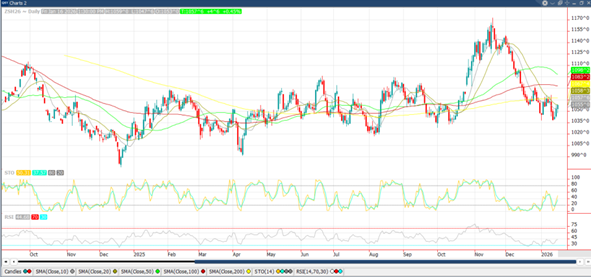
DEMAND
Soybean export sales were huge at 2.062 mmt. This is almost three times the sales from a week ago. Basis was steady/improved:
- My local beans: 30 under March (no change)
- Decatur: 5 over March (also status quo)
- River: 27 over March (4 cents improved)
CASH SOYBEANS
Cash beans lost a little ground on the week in some areas, but, notably, the river cash bid was steady. Given big U.S. stocks of 350 mb, it will be important to see if the crush continues to post record months as we’ve seen in the last few reports. December came in at the highest we’ve ever seen for December and the second highest overall. If I had cash beans, I’d do the same as any other time: sell incrementally on any rally. If we can see a pop back above $10.75, I’d be interested in moving some. However, many are down to gambling bushels, so it just depends on what you’re looking for. I wouldn’t expect too much, but at the same time, this bean market can move fast when it moves.
2026 SOYBEANS
November 2026 beans settled at $10.69, down 2 ¾ on the week. New beans, similar to new corn, could get some support as they try to boost acreage from last year. Given a likely move towards more acres, I struggle to get too bullish beans. I think a move back to $11 is possible, though, so having some offers between here and there might not be a bad idea if you can make those prices work. That’s what it ultimately boils down to-locking in something that works for your farm. I realize we don’t know production this early, and again, beans can move fast. So, I’d make sure to have flexibility when it comes to your bean marketing. Locking in a floor with some room to the upside is where I would feel most comfortable
Soybean Market Theme: The bean market had a better week than corn, but still lost ground. Keep an eye on Argentine weather and keep your offers current, while keeping some flex on new-crop.
As always, use the AgMarket.Net Profitability App to help you figure your break-evens and put your plan in place:
Let me know if I can help in any way. These markets are tricky, but with a plan in place, we can take the emotion out and make better decisions.